Evaluating Abstract Blocks: A Deep Dive into 3D Typography for Modern Design
In the crowded landscape of digital and print typography, finding a typeface that commands attention without sacrificing legibility is a persistent challenge for designers. Abstract Blocks has emerged as a significant contender in this space, offering a distinct aesthetic that merges geometric precision with volumetric depth. Unlike standard sans-serif fonts that rely on flat strokes, this 3D typeface introduces a tangible sense of structure, making it a compelling option for projects requiring visual impact. However, like any specialized design tool, it comes with specific strengths and limitations that must be weighed against project requirements.
Understanding the mechanics and application of Abstract Blocks requires looking beyond its initial visual appeal. It is not merely a decorative font; it is a structural element that can define the hierarchy and mood of a composition. For adults navigating professional design decisions, whether for marketing campaigns, personal branding, or merchandise, evaluating whether this style fits the broader strategy is essential. This analysis explores the unique characteristics of the font, compares it to alternative approaches, and outlines practical scenarios where it excels or falls short.
The Distinctive Nature of Abstract Blocks
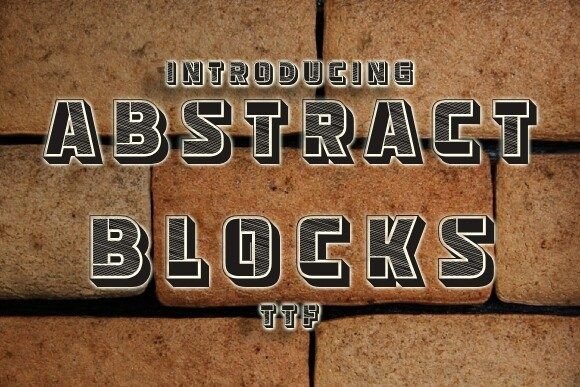
What sets Abstract Blocks apart from conventional typography is its inherent three-dimensionality. Most standard fonts exist on a two-dimensional plane, relying on weight, spacing, and color to create interest. In contrast, this typeface simulates physical volume through shading, perspective, and block-like construction. The result is a text that appears to occupy real space, creating an immediate focal point.
This architectural approach to letterforms offers several advantages. First, it provides instant visual weight. Even at smaller sizes, the perceived depth ensures that the text does not get lost against complex backgrounds. Second, the geometric nature of the blocks lends itself well to modern, industrial, or futuristic themes. The sharp edges and solid forms convey stability and strength, making it a natural fit for brands that want to project confidence and solidity.
However, the very features that make Abstract Blocks striking also impose constraints. The complexity of the 3D rendering means that fine details can become indistinguishable if the font size is reduced too much. Legibility is the primary trade-off when choosing a highly stylized 3D typeface. While it works beautifully as a headline or a logo, it is rarely suitable for body copy or long-form text. Designers must recognize that this font is intended for emphasis rather than exposition.
Comparing Abstract Blocks to Alternative Styles
When considering Abstract Blocks, it is helpful to compare it against other popular typographic categories to understand where it fits in the design spectrum. One common alternative is the use of standard bold sans-serifs combined with drop shadows or layer effects. While these methods can simulate depth, they often lack the integrated structural integrity of a true 3D font. With separate layers, the shadow can feel disconnected from the letterform, whereas Abstract Blocks builds the dimensionality directly into the glyph, resulting in a more cohesive look.
Another comparison point is the category of "display" fonts that prioritize ornamentation over structure. Many display fonts use intricate serifs, ligatures, or hand-drawn aesthetics to stand out. These styles excel in evoking emotion or nostalgia but may clash with the clean, minimalist vibe that Abstract Blocks promotes. If a design calls for a retro, organic, or elegant feel, a different category would likely serve better. Conversely, if the goal is a sleek, contemporary, and tech-forward appearance, the blocky geometry of this typeface is superior.
Furthermore, there are vector-based 3D modeling tools that allow designers to extrude text manually. While this offers infinite customization, it is time-consuming and requires advanced technical skills. Abstract Blocks provides a pre-optimized solution that delivers high-quality results quickly. For professionals working under tight deadlines, the efficiency of using a dedicated 3D typeface often outweighs the marginal gains of custom modeling, provided the default style aligns with the creative vision.
Practical Applications: Posters, Flyers, and Merchandise
The versatility of Abstract Blocks is best realized in specific media formats where visual impact is paramount. One of its strongest use cases is in poster design. Posters often need to capture attention from a distance, and the volumetric nature of this font ensures that the message stands out even before a viewer reads the words. The interplay of light and shadow within the letters creates a dynamic texture that adds richness to large-format prints.
Similarly, flyers benefit from the immediate grab of a 3D headline. In a stack of printed materials, a flyer featuring Abstract Blocks can distinguish itself through its tactile quality. The font suggests a premium, substantial product, which can influence consumer perception positively. When designing flyers, pairing this bold header with a clean, simple sans-serif for the body text creates a balanced hierarchy that guides the reader's eye effectively.
Merchandise, particularly t-shirts, represents another ideal application. On fabric, flat text can sometimes appear washed out or uninteresting after repeated washes. The illusion of depth provided by Abstract Blocks adds a layer of sophistication that elevates a basic garment into a fashion statement. The blocky shapes translate well to screen printing and heat transfer methods, maintaining their definition without losing clarity. However, designers should consider the placement; a full-back print might overwhelm the wearer, while a chest logo using this font strikes the right balance of visibility and subtlety.
Decision Factors: When to Choose and When to Look Elsewhere
Determining whether Abstract Blocks is the right choice depends heavily on the context of the project. It is the optimal solution when the primary goal is to create a strong visual anchor. If a design feels flat or lacks a clear focal point, introducing this 3D typeface can instantly resolve the issue. It is particularly effective for events, product launches, and brand identities that wish to communicate innovation and robustness.
Conversely, there are situations where this font is ill-suited. Projects requiring extensive readability, such as brochures, reports, or website navigation menus, should avoid Abstract Blocks. The complexity of the letterforms can hinder quick scanning and comprehension. Additionally, designs aiming for a soft, romantic, or traditional aesthetic will find the rigid geometry of this font jarring. In these cases, a serif or script typeface would align better with the emotional tone.
Budget and timeline are also critical decision factors. While Abstract Blocks is generally efficient to implement, ensuring it renders correctly across different devices and print setups may require additional testing. If a project involves multi-platform deployment with strict consistency requirements, the designer must verify that the 3D effects remain intact on mobile screens and various paper stocks. If the technical overhead becomes too high, a simpler font with applied effects might be a more pragmatic alternative.
Strategic Implementation for Maximum Impact
To leverage Abstract Blocks effectively, designers should focus on strategic implementation rather than indiscriminate use. Limiting the font to headlines and key phrases preserves its impact. Overusing a heavy 3D typeface can lead to visual fatigue, causing the audience to tune out the message. By reserving it for the most important elements, the design maintains a clear hierarchy.
Color selection plays a crucial role in enhancing the 3D effect. High-contrast palettes work best to accentuate the depth and shadows inherent in the font. Monochromatic schemes can also be effective, allowing the form of the letters to take center stage without distraction. Furthermore, the background texture should complement rather than compete with the font. Busy patterns can obscure the details of the blocks, so clean or subtly textured backgrounds are recommended.
Ultimately, Abstract Blocks is a powerful tool in the designer's arsenal, offering a unique blend of modernity and structural strength. By understanding its capabilities and limitations, professionals can make informed decisions about when to deploy it. Whether for a striking poster, an engaging flyer, or a stylish t-shirt, this 3D typeface has the potential to elevate a design significantly. The key lies in matching the font's bold character with the appropriate medium and message, ensuring that the final result is both visually stunning and functionally sound.