Reglues: The Whimsical Power of Non-Straight Typography in Modern Design
In the vast landscape of digital typography, where geometric sans-serifs and rigid serifs often dominate corporate communications, there exists a distinct category of typefaces that refuse to conform to straight lines. Among these, Reglues stands out as a compelling example of how playfulness can be engineered into a font without sacrificing legibility or structural integrity. This display font embodies a specific aesthetic philosophy: the rejection of the sterile grid in favor of organic movement. For designers, educators, and business owners looking to inject personality into their visual identity, understanding the nuances of Reglues offers more than just a new font choice; it provides a toolkit for emotional connection.
The Anatomy of Playfulness: Deconstructing the Design
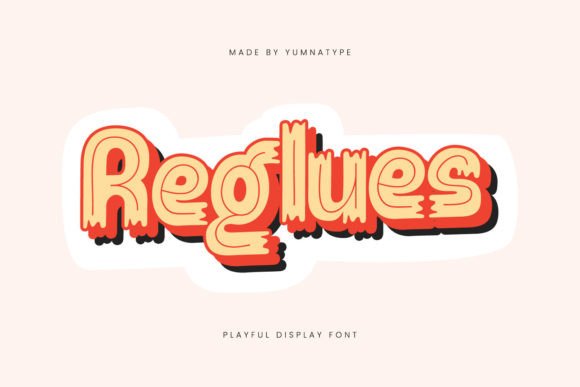
To truly appreciate why Reglues resonates with so many creative projects, one must look closely at its construction. Unlike standard fonts that rely on perfect circles and straight verticals, Reglues is defined by its non-straight outline. This characteristic is not a flaw but a deliberate design decision intended to mimic the imperfections of hand-drawn lettering. When a viewer scans text set in Reglues, the eye does not encounter a static wall of characters. Instead, it follows a subtle, rhythmic undulation that suggests life and energy.
The thickness of the strokes plays a crucial role in this dynamic. Designed with a substantial weight, the letters possess a bold presence that ensures they stand out even at smaller sizes. This heavy weight contrasts beautifully with the rounded shapes of the terminals and curves. The combination creates a visual texture that feels soft yet sturdy. It is this duality—softness in shape, strength in weight—that allows Reglues to convey a sense of approachability while maintaining authority.
- Rounded Geometry: Every corner is softened, eliminating sharp angles that might subconsciously signal aggression or rigidity.
- Organic Outlines: The non-linear edges create a "wobbly" effect that feels human-made rather than machine-generated.
- Bold Weight: The thick stroke width ensures high visibility and impact, making it ideal for headlines and short bursts of text.
Visual Impact and Cognitive Response
From a psychological perspective, the use of rounded, bold fonts like Reglues triggers specific cognitive responses. Research in environmental psychology and design suggests that curved shapes are perceived as safer, friendlier, and more inviting than angular ones. When a consumer encounters a brand using Reglues, the immediate association is often with fun, creativity, and accessibility. This makes the font particularly effective for industries that aim to lower barriers to entry, such as children's education, entertainment, and lifestyle brands.
However, the effectiveness of Reglues goes beyond simple association. The unique non-straight outline forces the brain to engage slightly more deeply with the text. Because the letters deviate from the expected norm, they capture attention more effectively than standard typefaces. In an era of information overload, this ability to arrest the eye is a valuable asset for marketers and content creators alike.
Versatility Through Variation: The Inline Advantage
One of the most significant strengths of the Reglues family is its inclusion of an inline version. While the standard bold weight offers a solid, blocky appearance, the inline variant introduces a layer of elegance and sophistication that expands the font's utility. The inline style features a secondary line running parallel to the main stroke, adding depth and dimension to the character forms.
This variation allows designers to maintain typographic consistency across different contexts within a single project. For instance, a brand might use the standard bold Reglues for primary headlines to grab attention, while utilizing the inline version for subheadings or pull quotes to add a touch of refinement. This flexibility prevents the design from becoming monotonous, even when sticking to a single typeface family.
The inline version also bridges the gap between playful and professional. While the base font screams "fun," the inline iteration whispers "quality." This makes Reglues suitable for a broader range of applications, including packaging for premium confectionery, event invitations for creative workshops, or branding for boutique agencies that want to appear innovative yet polished.
Strategic Applications Across Industries
The utility of Reglues extends far beyond simple decoration. Its unique characteristics make it a strategic tool for various sectors, each leveraging the font's attributes to achieve specific communication goals.
Educational Materials and Children's Media
For educators and publishers of children's content, Reglues is an invaluable resource. The rounded shapes and friendly demeanor of the font align perfectly with the developmental needs of young readers. Textbooks, flashcards, and classroom posters benefit from the high contrast and clear, open counters of the letters. Furthermore, the whimsical nature of the non-straight outlines can make learning feel less like a chore and more like an adventure. When used in educational apps or interactive whiteboards, Reglues helps create an environment that encourages curiosity and engagement.
Creative Branding and Marketing Campaigns
Businesses operating in the creative sector often struggle to differentiate themselves in a saturated market. Reglues offers a solution by providing a visual voice that is instantly recognizable. Startups in the tech, food, and fashion industries have increasingly turned to bold, quirky typefaces to signal innovation. A coffee shop using Reglues on its menu board immediately communicates a relaxed, artisanal vibe. Similarly, a marketing agency might use the font in its logo to suggest that they think outside the box.
The versatility of the font allows it to adapt to various campaign tones. A summer sale poster can utilize the full bold weight for maximum excitement, while a holiday greeting card might employ the inline version for a festive yet elegant touch. The key is to understand the audience and match the font's energy to the message being conveyed.
Event Promotion and Social Media Graphics
In the fast-paced world of social media, grabbing attention within seconds is paramount. Reglues excels in this arena due to its substantial weight and unique contours. Event flyers, Instagram stories, and YouTube thumbnails featuring Reglues tend to perform better because they break the visual monotony of standard sans-serif headers. The font's playful nature invites interaction, encouraging users to pause and read the accompanying copy.
Designers often pair Reglues with vibrant color palettes and abstract backgrounds to amplify its energetic qualities. However, it is equally effective when used against clean, minimalist backgrounds, where the intricate details of the non-straight outlines become the focal point.
Implementation Considerations and Best Practices
While Reglues offers immense potential, it is important to recognize its limitations. As a display font, it is not designed for long-form body text. The irregular outlines and heavy weight can cause eye strain if used in paragraphs exceeding a few sentences. Therefore, the most effective implementation strategy involves using Reglues sparingly for headlines, titles, and emphasis points.
When integrating Reglues into a design workflow, consider the following best practices:
- Hierarchy Management: Use Reglues for H1 and H2 headings, pairing it with a neutral, highly readable sans-serif or serif font for body copy. This creates a balanced hierarchy that guides the reader smoothly through the content.
- Color Contrast: Due to the thick weight of the letters, ensure there is sufficient contrast between the text and the background. Light colors on dark backgrounds work exceptionally well to highlight the rounded edges.
- Kerning Adjustments: The rounded shapes may require slight adjustments to letter spacing (kerning) to prevent characters from appearing too crowded or too disjointed. Pay close attention to pairs involving round letters like 'o', 'c', and 'e'.
- Contextual Appropriateness: Avoid using Reglues in contexts that demand strict formality, such as legal documents or medical reports. Its playful nature could undermine the seriousness of the content.
Furthermore, designers should experiment with the inline version to see how it interacts with other graphical elements. The double-line effect can sometimes compete with complex textures or patterns, so simplicity in the surrounding design often yields the best results.
The Future of Quirky Typography
The rise of fonts like Reglues reflects a broader shift in design trends away from minimalism and toward maximalism and personality. As digital spaces become increasingly homogenized, brands and creators are seeking ways to express individuality. The demand for typefaces that evoke emotion and tell a story is growing, and Reglues is at the forefront of this movement.
Looking ahead, we can expect to see more variations of such fonts emerging, perhaps with animated capabilities or variable weights that allow for even greater customization. However, the core principles that make Reglues successful—the balance of boldness and whimsy, the rejection of the straight line, and the commitment to user engagement—will remain relevant. As technology evolves, the human desire for connection through design will persist, ensuring that fonts with character continue to play a vital role in our visual culture.
Ultimately, Reglues is more than just a collection of letters; it is a statement about the power of imperfection in a perfect world. By embracing the wobble and the curve, designers can create experiences that feel more authentic, more engaging, and ultimately, more human. Whether you are a hobbyist creating a personal blog, a researcher designing a presentation, or a business owner launching a new product, incorporating Reglues into your toolkit opens up a world of creative possibilities.