Evaluating Bloobey: A Practical Guide to Whimsical Bubble Fonts for Children's Design
In the realm of typography for children's media, the choice of font often dictates the initial emotional connection a young reader makes with a book or digital interface. Among the various display options available, Bloobey has emerged as a distinct contender, offering a specific aesthetic that balances boldness with playfulness. For designers, authors, and publishers navigating the crowded market of typefaces, understanding where Bloobey fits within the broader ecosystem is essential. This evaluation explores the characteristics of Bloobey, compares it to alternative styles, and outlines the practical scenarios where its unique attributes provide the most value.
Defining the Aesthetic: What Makes Bloobey Distinct?
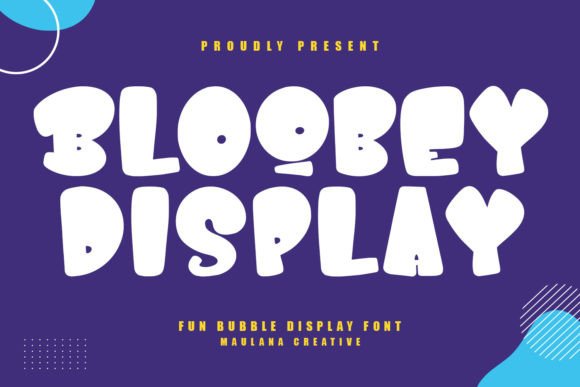
Bloobey is fundamentally a bubble display font, a category characterized by rounded, inflated letterforms that mimic the appearance of soap bubbles or soft balloons. However, Bloobey distinguishes itself through its execution of these forms. Unlike some bubble fonts that rely on thin strokes or uniform thickness, Bloobey utilizes bold, heavy strokes that ensure high legibility even at smaller sizes or when viewed from a distance. The design incorporates whimsical elements without sacrificing structural integrity, making it suitable for more than just decorative flourishes.
A key differentiator for Bloobey is its inclusion of alternate character variations. In typography, alternates allow designers to introduce visual rhythm and prevent monotony in repetitive text. With Bloobey, these variations might include different dot placements on "i"s, varied tail lengths on "y"s, or playful modifications to capital letters. This feature transforms the font from a static asset into a dynamic tool, enabling creators to craft titles that feel hand-crafted and organic rather than mechanically generated. The overall effect is one of joy and imagination, directly appealing to the cognitive and emotional preferences of children aged 3 to 8.
Comparing Bloobey to Standard Display Alternatives
When evaluating Bloobey against other options in the children's typography category, several tradeoffs become apparent. The primary comparison often lies between bubble fonts like Bloobey and standard sans-serif fonts or handwritten scripts. While sans-serifs offer maximum neutrality and readability for body text, they often lack the immediate emotional hook required for cover art or chapter headings. Handwritten scripts can convey warmth but frequently suffer from legibility issues, particularly for early readers who are still mastering letter recognition.
Bloobey occupies a middle ground. It offers the high energy of a script font with the clarity of a geometric sans-serif. Compared to generic "cartoon" fonts found in default operating system libraries, Bloobey provides a higher degree of polish and intentional design. Generic cartoon fonts often suffer from inconsistent stroke weights and awkward kerning, which can make text appear sloppy. In contrast, Bloobey maintains a consistent visual weight, ensuring that the "bubble" effect does not distort the shape of the letters to the point of confusion.
Another area of comparison involves the level of customization. Many free or low-cost alternatives offer limited character sets, lacking extended ligatures or special glyphs. Bloobey's robust set of alternates gives it an edge over basic competitors, allowing for more sophisticated design layouts. However, compared to premium, highly customizable vector-based type families that allow for infinite manipulation of individual nodes, Bloobey remains a fixed-font solution. Users seeking total control over every curve may find the pre-set variations limiting, though this constraint also ensures brand consistency across different applications.
Legibility vs. Decorative Appeal
The decision to use Bloobey often hinges on the balance between legibility and decorative appeal. For very young children, the bold strokes of Bloobey aid in distinguishing similar-looking characters, such as "b" and "d" or "p" and "q." The rounded nature of the font reduces visual clutter, which can be overwhelming for developing eyes. However, because Bloobey is a display font, it is not intended for long-form body text. Using it for paragraphs would likely result in eye strain due to the irregular shapes and high ink coverage. Therefore, the optimal use case is strictly for headlines, pull quotes, and short, impactful phrases where visual impact takes precedence over reading endurance.
Strengths and Tradeoffs in Real-World Applications
Implementing Bloobey in a project brings specific strengths that align well with educational and entertainment goals. Its primary strength is its ability to instantly signal "fun" and "approachability." In a children's book, the title page sets the tone; Bloobey communicates that the content inside is safe, engaging, and designed for enjoyment. This psychological cue is valuable for parents selecting books and for children deciding what to read next.
However, there are tradeoffs to consider. The whimsical nature of Bloobey means it may not suit all genres. A serious educational text about history or science might require a more neutral typeface to maintain credibility. Similarly, for older children transitioning into middle grade literature (ages 9–12), the bubbly aesthetic of Bloobey might feel too juvenile, potentially alienating the target audience. In these cases, a more mature serif or a clean, modern sans-serif would be a better strategic choice.
Furthermore, while the bold strokes are excellent for print, they can pose challenges in digital environments with low-resolution screens. The thick lines may blur slightly on small mobile devices if not optimized correctly. Designers must test the font at various screen sizes to ensure the intricate details of the alternate characters remain visible. If the design relies heavily on fine details within the bubbles, those nuances could be lost on lower-end tablets or phones.
Decision Factors: When to Choose Bloobey
Choosing Bloobey should be a deliberate decision based on the specific requirements of the project. It is the right choice when the goal is to create a strong, memorable visual identity for a product aimed at preschoolers or early elementary students. If the design brief calls for a font that feels bouncy, energetic, and friendly, Bloobey delivers effectively. It is particularly well-suited for:
- Book Covers and Titles: Where grabbing attention on a shelf or thumbnail is the priority.
- Chapter Headings: To break up text and provide visual anchors for young readers.
- Logos for Children's Brands: Such as toy companies, daycare centers, or educational apps.
- Promotional Materials: Flyers, posters, and event invitations for school functions or family events.
Conversely, readers should look for alternative options if the project requires extensive body text, a formal tone, or a target audience of teenagers and adults. If the design needs to convey sophistication or seriousness, the playful nature of Bloobey will work against the intended message. Additionally, if the budget allows for custom lettering or a more expensive, fully variable font family, those might offer greater flexibility for complex branding campaigns.
Practical Implementation and Best Practices
To maximize the effectiveness of Bloobey, designers should adhere to best practices regarding pairing and spacing. Because Bloobey is visually heavy, it pairs best with a simple, light-weight sans-serif for body text. This contrast ensures that the headings pop without competing with the main narrative. Avoid pairing Bloobey with another decorative font, as this creates visual noise and reduces overall readability.
Kerning and tracking are also critical. The round shapes of the letters can sometimes create uneven gaps between characters. Manually adjusting the spacing can enhance the flow and ensure the text looks balanced. Furthermore, utilizing the alternate characters strategically—rather than randomly—can add a layer of thoughtfulness to the design. For example, using a specific alternate only for the first letter of a title can create a subtle focal point without overwhelming the viewer.
In conclusion, Bloobey represents a specialized tool in the typographer's kit. It excels in creating joyful, engaging designs for children's media but is not a universal solution. By understanding its strengths, limitations, and ideal use cases, designers can make informed decisions that enhance their projects. Whether creating a storybook, an educational app, or a marketing campaign, the choice to use Bloobey should align with the need for bold, whimsical communication that resonates with a young audience.