Zamboga: A Strategic Approach to High-Impact Display Typography
In the crowded landscape of visual communication, the difference between a message that resonates and one that is ignored often comes down to a single variable: typeface selection. Zamboga emerges not merely as another decorative font, but as a strategic tool designed to command attention in environments saturated with noise. For entrepreneurs, marketers, and creators, the decision to integrate Zamboga into a design system should be driven by clear objectives rather than aesthetic whim. This bold, vibrant typeface offers a powerful mechanism for establishing hierarchy, reinforcing brand identity, and guiding user focus, provided it is deployed with intention.
The utility of Zamboga lies in its structural confidence. Crafted specifically for display purposes, it possesses the weight and character necessary to stop a scrolling eye or capture a passerby's gaze. However, its strength is also its constraint. Understanding where this font fits within your broader operational and creative goals is essential for maximizing its return on investment. When used correctly, Zamboga transforms from a simple set of characters into a pillar of your visual strategy, supporting everything from short-term campaign launches to long-term brand positioning.
Defining the Role of Zamboga in Visual Hierarchy
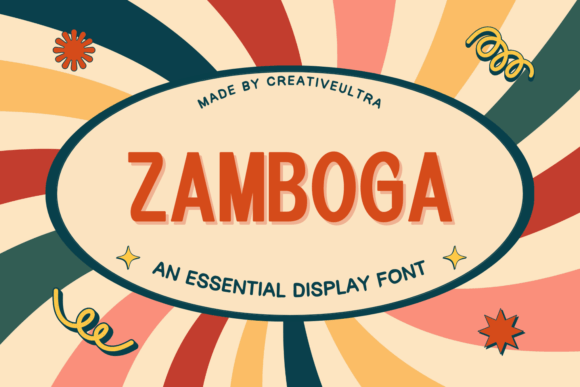
To leverage Zamboga effectively, one must first understand its specific domain. It is a display font, meaning it is engineered for large sizes and short bursts of text. Its architecture—featuring bold strokes, distinctive curves, and a commanding presence—makes it unsuitable for body copy or dense informational blocks. Instead, its role is to act as an anchor point in a composition.
Strategically, Zamboga serves as the "loudspeaker" in your visual mix. In a marketing funnel, the top-of-funnel assets require immediate engagement. Posters, billboards, social media headers, and event banners are the primary battlegrounds where Zamboga excels. By utilizing its uppercase alphabets and numerals, designers can create headlines that assert authority and clarity. The font does not whisper; it declares. This characteristic makes it particularly valuable for industries that rely on instant recognition, such as retail promotions, entertainment events, and bold lifestyle branding.
When planning a project, ask yourself: What is the single most important piece of information the viewer needs to absorb? If the answer is a headline, a call to action, or a brand name, Zamboga is likely the appropriate vehicle. Its high-impact appeal ensures that this critical information is not lost in the clutter of surrounding elements. By reserving Zamboga for these key focal points, you establish a clear visual hierarchy that guides the audience through your content logically and efficiently.
Strategic Applications Across Diverse Media
The versatility of Zamboga extends beyond simple headlines. Its inclusion of numbers alongside uppercase letters broadens its applicability across various functional contexts. Consider the following scenarios where Zamboga can drive tangible results:
- Promotional Campaigns: Limited-time offers, sale percentages, and countdown timers benefit immensely from the font's boldness. A "50% OFF" rendered in Zamboga carries more urgency than standard sans-serif alternatives, directly influencing conversion rates.
- Event Branding: Concert posters, festival banners, and conference signage require a typeface that conveys energy and scale. Zamboga's vibrant nature aligns perfectly with the excitement associated with live experiences, helping to build anticipation and attendance.
- Product Labeling: For packaging that needs to stand out on a shelf, Zamboga can serve as the primary identifier for product names or key features. Its distinct shape creates a memorable silhouette, aiding in brand recall even at a glance.
- Digital Interfaces: While caution is required, Zamboga works well for hero sections on landing pages or app splash screens. These areas demand immediate impact, and the font delivers a professional yet striking introduction to the user experience.
In each of these use cases, the goal is consistency and impact. The font should not be treated as an afterthought but as a core component of the communication strategy. When a small business owner selects Zamboga for their new product line, they are signaling a commitment to quality and visibility. This decision supports the broader operational goal of differentiating the brand in a competitive market.
Planning for Long-Term Brand Consistency
While Zamboga offers immediate visual gratification, its true value is realized when integrated into a cohesive long-term brand strategy. Randomly applying bold fonts without a plan can lead to a fragmented identity that confuses customers. Instead, thoughtful integration requires defining specific rules for usage.
Begin by establishing a style guide that dictates when and how Zamboga appears. Does it pair best with a minimalist sans-serif for contrast, or does it work alongside other display fonts for a maximalist approach? Determining these pairings early prevents design drift over time. For example, using Zamboga exclusively for main headlines while reserving a neutral font for subheads and body text creates a rhythm that becomes synonymous with your brand voice.
Furthermore, consider the emotional resonance of the font. Zamboga projects confidence, vibrancy, and power. If your brand positioning relies on subtlety, elegance, or quiet sophistication, this typeface may send mixed signals. Alignment between the font's personality and your brand values is crucial for maintaining trust with your audience. A strategic review of your current assets will reveal whether Zamboga enhances your narrative or disrupts it.
For educators and publishers, the application might differ slightly. Here, Zamboga could be used to highlight key concepts in educational materials or to title chapters in a way that sparks curiosity. The objective remains the same: to direct attention and enhance comprehension through visual emphasis. By limiting its use to specific, high-value moments, the font retains its novelty and effectiveness, preventing audience fatigue.
Risks of Misapplication and Decision-Making Pitfalls
The power of Zamboga comes with inherent risks if applied without context. The most common pitfall is overuse. Because the font is so visually dominant, using it for too much text can overwhelm the viewer, leading to cognitive overload and disengagement. A page filled entirely with Zamboga lacks breathing room and fails to prioritize information, ultimately undermining the communication goal.
Another risk involves legibility issues in low-resolution environments. While Zamboga is robust, intricate details in display fonts can sometimes blur on mobile devices or small print runs if not optimized correctly. Before committing to a design, test the font at various scales and across different mediums. Ensure that the uppercase forms remain crisp and the spacing (kerning) allows for easy reading.
Additionally, there is the danger of trend-chasing. Just because a font is vibrant does not mean it is right for every project. Relying on Zamboga simply because it looks "cool" without considering the target demographic or the message being conveyed is a strategic error. For instance, a legal firm or a medical practice might find the font's aggressive energy misaligned with the trust and calmness their clients seek. Decision-makers must weigh the font's characteristics against the specific expectations of their audience.
Avoiding these pitfalls requires a disciplined approach. Before downloading or licensing Zamboga, define the problem you are trying to solve. Is the current design failing to grab attention? Is the brand identity feeling flat? If the answer is yes, then Zamboga may be the solution. If the issue lies elsewhere, such as poor copywriting or weak imagery, changing the font will not fix the underlying problem.
Implementing Zamboga with Intention
To achieve better results with Zamboga, adopt a framework of intentional design. Start by auditing your current visual assets. Identify where your messages are getting lost and where you need to inject more energy. Once you have pinpointed these gaps, introduce Zamboga as a targeted intervention.
Practical implementation steps include:
- Define the Scope: Limit the use of Zamboga to headlines, logos, and key numerical data. Avoid using it for paragraphs or lists.
- Test Contrast: Experiment with color combinations. Zamboga's bold strokes handle high-contrast pairings well, but ensure the background color does not compete with the letterforms.
- Check Accessibility: Verify that the font size and weight meet accessibility standards for readability, especially for older demographics or users with visual impairments.
- Review Context: Place the font in the actual environment where it will be seen. A poster viewed from 10 feet away requires different sizing and spacing adjustments than a digital ad viewed on a smartphone.
By treating Zamboga as a strategic asset rather than a decorative element, you empower your team to make informed decisions that drive performance. Whether you are a freelancer crafting a pitch deck or a publisher designing a magazine cover, the deliberate use of this typeface can elevate the perceived value of your work. It adds an unforgettable touch to your composition, but only when that touch is placed with precision and purpose.
Ultimately, the success of any design project hinges on the alignment between form and function. Zamboga offers a robust form capable of delivering significant impact. Your responsibility as a creator or decision-maker is to ensure that this impact serves a clear function within your broader goals. When executed with thoughtfulness, Zamboga becomes more than just a font; it becomes a catalyst for connection, recognition, and lasting impression.