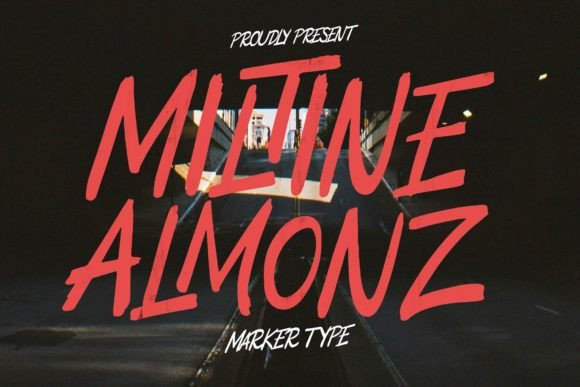
Miltine Almonz: A Strategic Guide to Marker-Style Typography
In the crowded landscape of digital and print communication, the choice of typeface is rarely just an aesthetic decision; it is a functional one that dictates how a message is received. Miltine Almonz stands out as a display font designed to mimic the organic, imperfect strokes of a marker pen. With its bold weight and playful character, it offers a distinct visual language that can either elevate a brand's approachability or undermine its authority if deployed without strategic intent. For entrepreneurs, marketers, and creators, understanding the specific utility of Miltine Almonz is essential for making informed design decisions that align with broader business goals.
The Visual Psychology of Marker-Style Fonts
The defining characteristic of Miltine Almonz is its simulation of hand-drawn ink. Unlike geometric sans-serifs that convey precision and corporate rigidity, or traditional serifs that suggest heritage and formality, Miltine Almonz communicates immediacy and human touch. This "marker" aesthetic triggers a psychological response in the viewer associated with brainstorming sessions, whiteboard planning, and personal notes. It suggests that the content is fresh, unfiltered, and directly from the creator.
For professionals aged 20 to 50, particularly those in creative industries or startups, this human element is a valuable asset. In an era where audiences are increasingly skeptical of polished, mass-produced content, the slight irregularities inherent in Miltine Almonz can build trust. It signals authenticity. However, this same quality carries a risk. The casual nature of the font must be balanced against the need for readability and professional credibility. Using Miltine Almonz requires a clear understanding of the context in which it will appear. Is the goal to invite collaboration? To highlight a key takeaway? Or to soften a complex message? The answer determines whether this font serves as a strategic tool or a visual distraction.
Strategic Applications in Branding and Marketing
When integrating Miltine Almonz into a branding strategy, the primary objective should be to reinforce specific brand values such as creativity, accessibility, and innovation. This font is exceptionally effective for headlines, call-to-action buttons, and social media graphics where capturing attention quickly is paramount. Its bold weight ensures legibility even at smaller sizes on mobile devices, while the playful style encourages engagement.
Consider the use case of a marketing campaign for a new educational app aimed at adult learners. A standard corporate font might feel sterile and intimidating, potentially increasing the barrier to entry. By utilizing Miltine Almonz for headers and motivational quotes, the campaign can project a tone of encouragement and ease. It visually whispers, "This is approachable; you can do this." Similarly, small business owners in the lifestyle or artisan sectors can leverage this font to differentiate their packaging and signage from competitors who rely on generic typography.
- Social Media Graphics: Use Miltine Almonz for overlay text on images to create a sense of urgency and personal recommendation.
- Event Signage: Ideal for workshops, conferences, and pop-up shops where the atmosphere needs to be energetic and welcoming.
- Internal Communications: Effective for internal memos or presentation slides that aim to break down hierarchical barriers and foster a culture of open dialogue.
However, strategic deployment means knowing when to stop. Miltine Almonz should generally be reserved for display purposes—headlines, logos, and short phrases. Attempting to set large blocks of body text in this font often leads to poor readability and visual fatigue. The irregular stroke widths and varying letter spacing, which contribute to its charm in short bursts, become obstacles when the eye must track long sentences. A disciplined approach involves pairing Miltine Almonz with a clean, neutral sans-serif or serif font for body copy, creating a hierarchy that guides the reader effortlessly through the content.
Decision-Making Frameworks for Font Selection
Before committing to Miltine Almonz for a project, decision-makers should apply a simple framework to evaluate its suitability. This process ensures that the font supports the intended outcome rather than working against it. The first step is to define the core message and the desired emotional response. If the goal is to convey stability, financial security, or legal authority, Miltine Almonz is likely a poor fit. Its playful nature contradicts the gravity required in these scenarios.
Next, consider the audience demographics and expectations. While younger demographics may appreciate the informal vibe of a marker-style font, certain professional sectors may view it as unprofessional if used incorrectly. For instance, a law firm might use Miltine Almonz for a community outreach poster about free legal aid to appear friendly, but using it for a contract or a press release regarding a merger would be a strategic error. Context is king. The font must align with the medium and the environment in which it will be consumed.
Furthermore, evaluate the scalability of the design. Will this graphic be viewed on a massive billboard or a tiny Instagram story? Miltine Almonz holds up well due to its bold construction, but the intricate details of the marker strokes can sometimes get lost if the resolution is too low or the size is too small. Testing the font across various platforms before finalizing the design is a critical step in the planning phase. This practical verification prevents costly rework and ensures consistent brand representation.
Risks of Unintentional Usage
The most significant risk associated with Miltine Almonz is the potential for brand dilution. When a font is chosen randomly based solely on trendiness rather than strategic alignment, it can confuse the audience about what the brand represents. If a company positions itself as a high-end luxury provider but uses a playful marker font for its logo, the disconnect creates cognitive dissonance. Customers may question the quality of the product or the seriousness of the service.
Additionally, overuse of display fonts like Miltine Almonz can lead to visual clutter. In a layout already dense with information, adding a highly stylized font increases the cognitive load on the reader. Instead of focusing on the message, the viewer spends mental energy deciphering the text. This friction can reduce conversion rates and diminish the overall effectiveness of the communication. It is crucial to treat typography as a limited resource; every stylistic choice should earn its place by contributing to the narrative.
Long-Term Value and Operational Consistency
From an operational standpoint, adopting Miltine Almonz requires establishing clear guidelines within a brand style guide. This ensures that all team members, freelancers, and agencies use the font consistently. Without these guardrails, the font can be applied haphazardly, leading to a fragmented brand identity. The style guide should specify appropriate pairings, minimum font sizes, color combinations, and contexts where the font is prohibited.
Moreover, thinking about the longevity of the design is essential. While marker-style fonts can feel trendy, they also tap into a timeless human behavior: writing by hand. If used with restraint and purpose, Miltine Almonz can remain relevant for years, provided it is not tied to a fleeting design fad. The key is to anchor the font's usage in the fundamental values of the brand rather than in passing aesthetics. This strategic foresight protects the investment in branding assets and ensures that the visual identity remains coherent as the business evolves.
Conclusion: Intentionality Over Impulse
Ultimately, the power of Miltine Almonz lies in its ability to humanize digital communication. It is a tool that, when wielded with precision, can bridge the gap between a brand and its audience. However, like any powerful tool, it demands respect and understanding. Entrepreneurs and creators must resist the urge to use it simply because it looks fun. Instead, they should ask how it serves the strategic objectives of the project. Does it clarify the message? Does it enhance the user experience? Does it reinforce the brand promise?
By approaching typography with a mindset of intentionality, professionals can transform Miltine Almonz from a mere decorative element into a cornerstone of effective communication. The result is a visual identity that is not only engaging and memorable but also strategically sound, driving better outcomes and fostering deeper connections with the target audience.