Mastering Visual Impact: The Power and Versatility of Signs Area
In the crowded landscape of digital and physical communication, the difference between a message that is seen and one that is ignored often comes down to a single element: typography. While thousands of fonts exist in every designer's library, few possess the immediate gravitational pull of Signs Area. This bold display font is not merely a collection of characters; it is a visual strategy designed to command attention with its strong presence and distinctive style. Whether you are crafting a billboard for a highway, designing a hero section for a landing page, or creating merchandise for a streetwear brand, understanding the unique mechanics of this typeface can elevate your project from good to unforgettable.
The Anatomy of Confidence: Design Characteristics
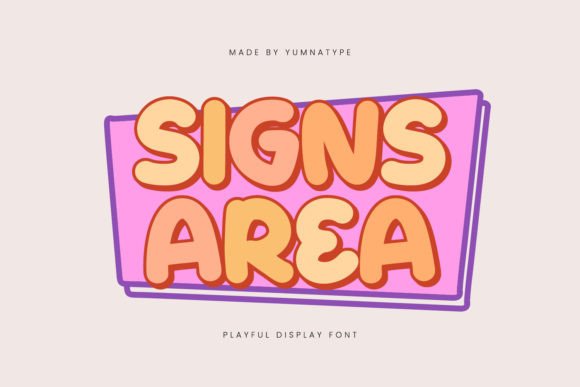
At its core, Signs Area is built on a foundation of strength. Each letter is meticulously designed to convey confidence, ensuring that your message is seen and understood with clarity and impact. Unlike delicate serif fonts that rely on subtle flourishes or thin sans-serifs that prioritize minimalism, this typeface embraces weight. The strokes are thick and substantial, creating a silhouette that stands firm against busy backgrounds or chaotic environments.
One of the most defining features of the font is its approach to contrast. In many traditional display fonts, there is a dramatic shift between thick and thin lines, which adds elegance but can sometimes compromise legibility at smaller sizes or lower resolutions. On the other hand, the low contrast in Signs Area gives the font a sense of uniformity and consistency. This design choice is deliberate. By maintaining a relatively even stroke width throughout the character set, the font ensures that every letter carries equal visual weight. This uniformity creates a solid block of text that feels stable and reliable, making it an ideal choice for headlines where immediate readability is paramount.
Why Uniformity Matters in Modern Design
The decision to utilize low contrast is particularly relevant in today's fast-paced visual culture. When users scroll through social media feeds or drive past outdoor advertising, they have fractions of a second to process information. High-contrast fonts can sometimes create "visual noise" when viewed quickly or from a distance, causing the eye to stumble over the varying line weights. Signs Area eliminates this friction. Its consistent structure allows the brain to recognize word shapes instantly, facilitating rapid comprehension. This makes it a powerhouse for applications where speed of reading is just as important as aesthetic appeal.
Strategic Applications Across Industries
The versatility of Signs Area extends far beyond simple headlines. Its robust nature allows it to adapt to various industries, each leveraging its distinct qualities for specific outcomes. Understanding where and how to deploy this font is key to maximizing its potential.
- Retail and Branding: For brands looking to project authority and trustworthiness, this font serves as an excellent anchor. Imagine a logo for a construction company, a financial consultancy, or a high-end automotive dealership. The heavy strokes suggest durability and permanence, reinforcing the brand's promise of reliability.
- Event Promotion: Concert posters, festival flyers, and event banners benefit immensely from the commanding presence of this typeface. It cuts through the clutter of competing events, ensuring that the name of the headliner or the date of the show is the first thing a passerby notices.
- Digital Interfaces: In web design, Signs Area excels as a display header. It works beautifully in hero sections where large text needs to overlay complex imagery without becoming illegible. The low contrast ensures that the text remains crisp even when rendered on mobile screens with varying pixel densities.
- Street Art and Urban Design: Given its name and aesthetic, the font fits naturally into urban environments. It mimics the look of stenciled signs and industrial markings, making it perfect for projects that aim to evoke a gritty, authentic, or counter-culture vibe.
Integrating Signs Area into Your Workflow
Incorporating a bold display font like Signs Area into a modern design workflow requires a strategic approach to pairing and spacing. Because the font is so dominant, it demands careful management of the surrounding elements to prevent the design from feeling overwhelming.
The Art of Pairing
A common mistake designers make when using heavy display fonts is pairing them with other bold or decorative typefaces. This creates a battle for attention that confuses the viewer. Instead, the best practice is to pair Signs Area with a clean, neutral sans-serif or a highly readable serif for body copy. The goal is to let the headline do the heavy lifting while the supporting text provides the necessary details without competition. For example, using a geometric sans-serif like Helvetica Now or a classic serif like Merriweather alongside Signs Area creates a balanced hierarchy that guides the reader's eye effortlessly.
Spacing and Kerning Considerations
Due to the thickness of the strokes, letter spacing (tracking) becomes a critical factor. Tight kerning can cause the letters to merge visually, turning words into indistinguishable blobs. Conversely, excessive spacing can break the rhythm of the text, making it feel disjointed. When working with Signs Area, it is often beneficial to slightly increase the tracking compared to standard fonts. This extra breathing room allows the uniform strokes to stand out individually while maintaining the cohesive block effect that defines the font's character.
Navigating Common Design Challenges
While Signs Area offers significant advantages, it is not a one-size-fits-all solution. Designers must consider specific factors before adopting it for a project to ensure it aligns with their goals.
Legibility at Small Sizes: As a display font, it is optimized for larger point sizes. Using it for body text or small captions is generally inadvisable. The thick strokes can become muddy when scaled down, reducing readability. It is best reserved for headlines, subheads, and short phrases where size is not a constraint.
Contextual Appropriateness: The strong, confident nature of the font might not suit every tone. Projects requiring a sense of delicacy, whimsy, or softness may find Signs Area too aggressive. Before committing, ask yourself if the message requires a shout or a whisper. If the content is about luxury, fragility, or organic growth, a different typographic voice might be more appropriate.
Color and Background Interaction: Because of its low contrast and heavy weight, the font interacts uniquely with background colors. It works exceptionally well in monochromatic schemes or high-contrast combinations like white on black. However, placing it over complex patterns or low-contrast backgrounds can diminish its impact. Always test the font in its intended environment to ensure the message retains its clarity and impact.
Future-Proofing Your Typography Choices
As design trends continue to evolve, the demand for bold, clear, and impactful typography shows no sign of waning. In an era dominated by mobile-first experiences and short attention spans, the ability to communicate a message instantly is invaluable. Signs Area represents a timeless approach to this challenge. Its reliance on structural integrity rather than fleeting stylistic trends ensures that designs utilizing this font will remain effective and relevant for years to come.
Whether you are a graphic designer refining a brand identity, a marketing professional launching a campaign, or a developer building a user interface, the principles behind Signs Area offer valuable lessons. By prioritizing uniformity, strength, and clarity, you can create visual communications that resonate deeply with your audience. The font reminds us that sometimes, the most powerful statement is the one that speaks with a unified, unshakeable voice.
Ultimately, the choice to use Signs Area is a choice to prioritize the viewer's experience. It is a commitment to ensuring that your message is not just heard, but felt. By leveraging its distinctive style and strong presence, you can transform ordinary text into a memorable visual asset that commands the space it occupies and leaves a lasting impression on everyone who sees it.